

Biosafety Frequently Ask Questions
Biosafety Definitions
- What are Biological Hazards or Biohazards?
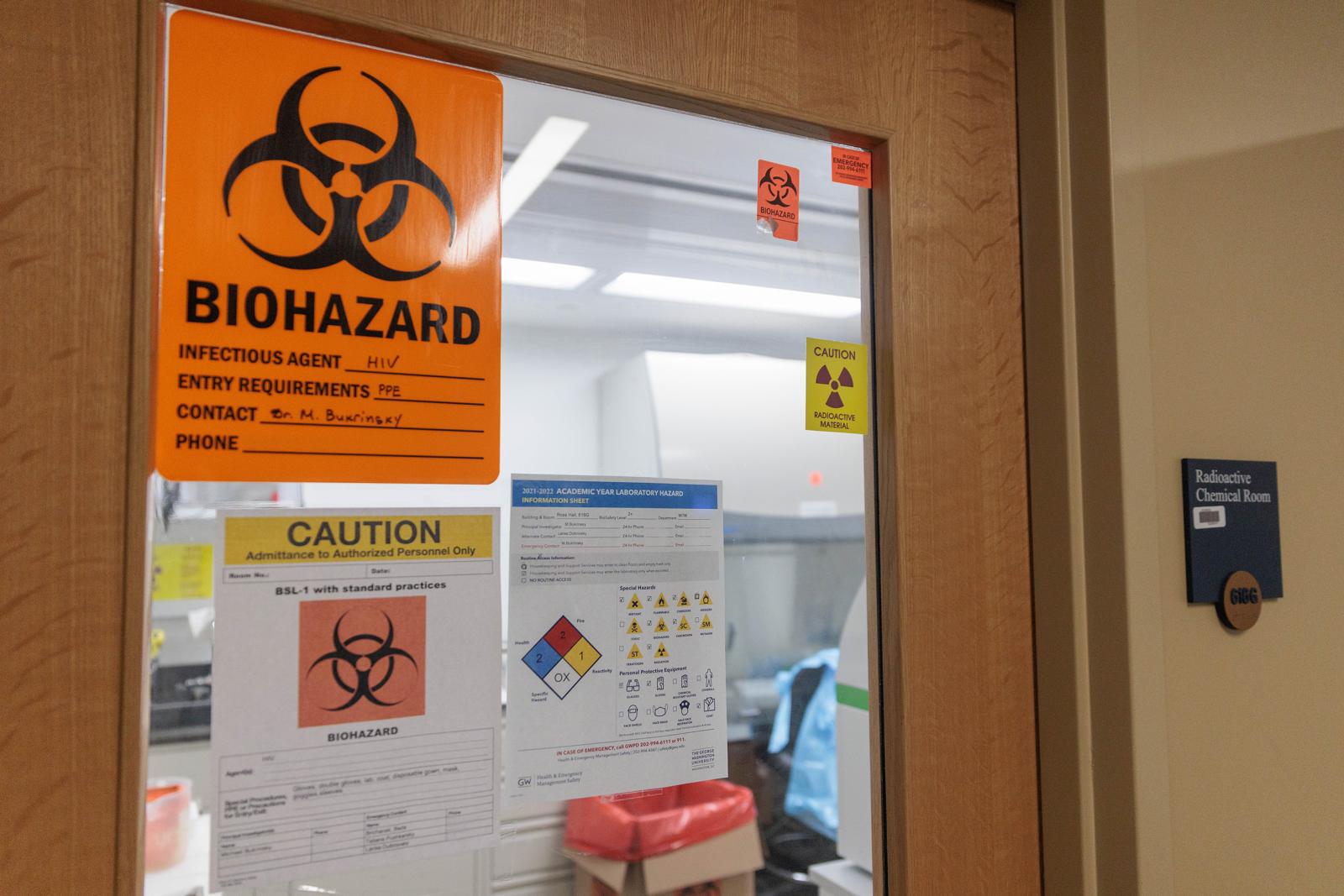
Biohazards include biological agents and toxins hazardous to humans, animals, wildlife, or plants such as parasites, viruses, bacteria, fungi, prions; and biologically-active materials such as toxins, allergens, and venoms. In addition to causing infectious disease in living organisms, biohazards can cause significant damage to the environment. For context, “infectious” is not synonymous with “pathogenic”. Many agents that are infectious do not normally cause disease (i.e., commensal organisms). However, even work with microbes that are not normally associated with disease can be subject to regulatory oversight by an IBC
Human source materials and human cell lines are included as biohazards because of the potential to carry bloodborne pathogens such as HIV, Hepatitis B virus, and Hepatitis C virus
- What is a Biological Risk Assessment?
A biological risk assessment is the process used to determine the appropriate biosafety level for each project conducted within a biological research laboratory. A biological risk assessment is a process that evaluates multiple factors to determine the risk to laboratory workers, the community, or the environment of working with an infectious agent, toxin, or other biological hazard.
- What are Biological Risk Groups?
The National Institutes of Health (NIH) has categorized several infectious microorganisms into “risk groups.” Risk groups are classifications of infectious agents and toxins that identify the relative likelihood and severity of disease an infectious agent or toxin can cause. Since an evaluation of any one factor in isolation will not give laboratory workers an adequate understanding of the risks associated with a given activity and infectious agent or toxin, the factors described above are examined together to determine the health-related risks associated with each individual project
Research Using Biohazards
- What is the Role of the Institutional Biosafety Committee (IBC)?
The IBC ensures that all instructional and research laboratory activities are conducted in compliance with requirements and federally mandated guidelines, such as those outlined by the NIH, CDC, USDA, OSHA and GWU, by advising, reviewing, and approving policies and procedures related to procurement, use, storage, transportation, and disposal of biohazardous materials.
- How do I register with the Institutional Biosafety Committee (IBC)?
You submit your research being performed as an IBC Application through the iRIS (Integrated Research Information Software) website. Any further questions regarding the submission process and whether specific research requires an IBC can be directed to the ORS email
- What type of research requires the Institutional Biosafety Committee (IBC) approval?
Any research that involves the following:
- Human Materials (including human cell lines)
- Animals and/or Animal Materials
- Microbiological Materials (Bacterial, Fungal, Parasitic, and Viral in Nature)
- Biological Toxins
- Recombinant or synthetic nucleic acid molecules, which are defined under NIH Guidelines as:
- Molecules that a) are constructed by joining nucleic acid molecules and b) that can replicate in a living cell, i.e., recombinant nucleic acids
- Nucleic acid molecules that are chemically or by other means synthesized or amplified, including those that are chemically or otherwise modified but can base pair with naturally occurring nucleic acid molecules, i.e., synthetic nucleic acids
- Molecules that result from the replication of those described in (1) or (2) above.
- I share a lab with an investigator whose research and lab has been IBC approved. Do I still need to apply to the IBC for approval of my project?
Yes, but only if the research involved falls under the guidelines laid out above. Simply working in a research space does not automatically require IBC oversight. Please contact the ORS email for any questions regarding this
- Can I attend IBC meetings?
Only IBC members can attend meetings or individual Principal Investigators (PIs) and their designees that are involved in the creation of an IBC in question
Biohazard Safety Training and Laboratory Safety Procedures
- What training is required to work with biohazards and/or to work under an IBC protocol?
Depending on the type of research being performed and the hazards encountered, multiple training certifications may be necessary. You can find a complete list under the Mandatory Training section of the ORS website
- How do I get the required Biosafety training?
Contact ORS through email and detail which specific training in required and whether it is for a new research staff or for an annual refresher
- Do I need specialized training to ship biological items from my lab space?
Yes, you need to complete IATA Shipping Training, you can put in a training request with the ORS via email
- What should my Biosafety Manual include and are there templates?
The manual should include the following:
- Emergency Contact Information for All Current Lab Personnel
- Current Lab Experimental Procedures/SOPs
- Lab-Specific Safety Manual
- Active IBC Protocols (for reference and recordkeeping if iRIS is down)
- Lab Staff Training Records
- GWU safety documents (biosafety, chemical, recombinant DNA, etc.)
- Emergency Procedures
ORS does provide a Biosafety Manual template that serves to facilitate the creation of biosafety manuals that covers all the general and unique safety needs of a lab space
- Does ORS provide sharps containers for lab spaces?
No, ORS does not provide sharps containers. Those will have to be ordered by the laboratory PI or designee
- My biological safety cabinet (BSC) needs re-certification. Does anyone on campus certify BSCs?
If your BSC has previously been certified and its certification has expired or will soon expire, please contact our office to schedule testing and re-certification. You can find more information about BSC maintenance on our website here
- What qualifies my research space to require a biosafety laboratory inspection?
Any lab space where work with biological and/or biohazardous substances is required to go through an annual biosafety inspection
- How do I prepare for a biosafety laboratory inspection?
First, submit a request for a lab inspection here, and provide a date and time. Obtain a copy of the lab inspection checklist and complete it going through your designated lab space. The inspection team will provide recommendations using this checklist as a blueprint.
- Who do we contact if our autoclave encounters an issue?
Contact GWU Facilities and put in a Fix It request
General Biosafety Guidelines
- When can I wear PPE outside of the lab space?
No PPE may be worn outside of lab spaces at ANY TIME. All laboratory staff are REQUIRED to perform the removal of gloves, goggles, and lab coats before exiting a lab space. Please remember to wash your hands before exiting a lab space
- My desk is inside a lab space, is food or drink allowed only at my desk?
NO food or drink can be consumed inside any lab space, NO EXCEPTIONS. You will have to use communal eating spaces outside of the lab
- How do you dispose of Biohazard Boxes and obtain new ones?
All lab material disposal is handled by Environmental Health & Safety (EH&S). To request a hazardous waste pick-up use the FixIt Portal's "Alarms, Safety, Lab Equipment". All biohazard waste boxes are provided through this office, free of charge. For more information email safety
 gwu [dot] edu (safety[at]gwu[dot]edu)
- Do I need to consult ORS if a lab is planning to move into a new lab space or if there is a renovation of an existing lab space?
Yes, ORS should be consulted at the earliest stage of planning. This is necessary to ensure that required safety features are incorporated into the design. Some spaces cannot easily accommodate work with biohazardous materials, so ORS should be notified of the type of work to be conducted in the proposed space in order to advise on the feasibility of the proposal.
Note that the wider expertise of EH&S and Facilities should be consulted in addition to ORS since all of these offices oversee different areas of safety. If safety requirements are not met, then it is possible that the space cannot be approved for work with biohazardous materials without expensive and time-consuming renovations.
- Can I prepare 10% Bleach and store it for future surface decontamination use in the laboratory space?
NO, as 10% bleach solutions only have effectiveness for 24 hours. After 24 hours, the disinfecting properties decrease significantly, and it is recommended that the solution is made fresh daily.
At standard room temperatures, standard Clorox bleach stock solutions can be stored for about 6 months. After this time, bleach will begin to degrade at a rate of 20% each year until it has completely degraded to salt and water. If your lab space does not use bleach at high frequencies, please make sure to regularly check when products are received and should be replaced.
Shelf stable and ready to use bleach solutions (i.e. Bleach-Rite) can be acquired from certain suppliers. Please contact ORS for guidance and look to the Sterilization, Disinfection, and Decontamination section on the ORS website here for additional information
- Our lab eyewash stations have a service tag with dates listed, do I need to still post a weekly eyewash checklist?
Yes, the ORS eyewash checklist and the service tags are separate maintenance documents. The latter is used by facilities to perform annual checks on the eyewash stations as part of building maintenance. Your lab staff will still need to perform weekly checks on your eyewash stations as part of OSHA safety standards. Please contact facilities if your annual check has not been performed